With business development, enterprise applications require multi-regional hybrid cloud deployment. Traditional enterprise integration methods can hardly meet the requirements of cross-network safe and reliable integration on the cloud, under the cloud, and between the clouds; after the application is on the cloud, a new information island will be formed, and the enterprise Integration of private cloud applications is difficult.

Enterprise Internet of Things data exists in multi-vendor equipment, IT systems, closed industrial systems, and multiple IOT platforms, resulting in massive amounts of enterprise OT (production and Internet of things equipment) data, unable to efficiently enter IT systems and big data platforms, and value cannot be mined.

The complexity of enterprise business determines the existence of traditional applications, cloud applications, SaaS, and multiple data sources within the enterprise; traditional "point-to-point" integration creates complex integration and dependencies between enterprise system applications, and the architecture is difficult to expand and maintain.

Enterprise internal and external business innovation and the integration of multi-regional partners need to open up the internal capabilities of the enterprise, and at the same time introduce external innovative cloud services into the enterprise; the enterprise integration platform is required to provide capabilities such as cross-network security integration, service orchestration, and service opening.

e Cloud builds a basic, flexible, credible and economical business continuity guarantee platform for enterprises
Help enterprises cope with the tide pressure of financial system business, provide a safe, stable and isolated operating environment, and help enterprises to ensure classified protection and compliance.
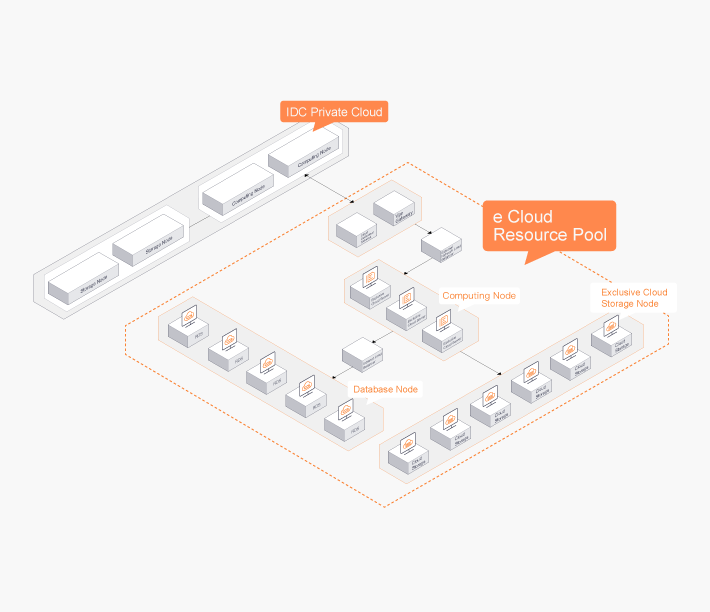
-Exclusive Computing and Storage -100% Safety -Public Network Access -Cost saving -Hybrid Cloud Architecture -High Speed Intercommunication
 Contact Us
We use cookies to ensure your high-speed browsing experience. By continuing to browse this site, you agree to our use of cookies. Details